
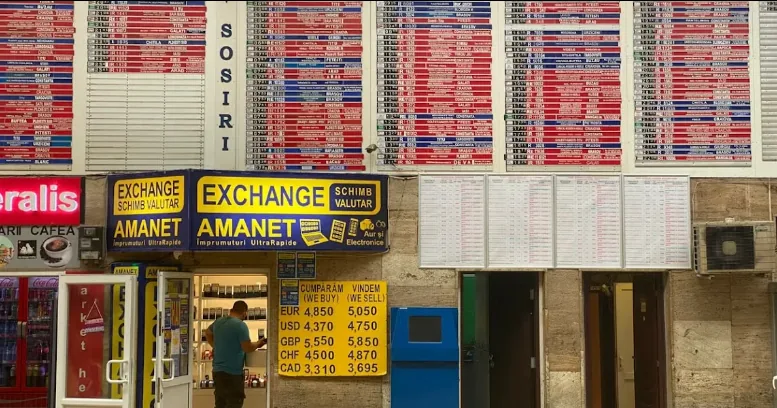
In the foreign exchange (forex) market, every trade swaps one currency for another, so currencies always trade in pairs such as the euro against the US dollar.
Trading in this market averaged about USD 9.5 trillion a day in April 2025. Just 10 pairs took almost three-quarters of it.
This guide is for you whether you are choosing your first pair or already trade and want to see where the volume really sits.
It ranks the 10 busiest pairs using the latest global survey data. It also explains what that volume means for your costs and your timing.
TL;DR: The Most Traded Currency Pairs in Brief
These are the key facts from the latest global volume data:
EUR/USD is the most traded currency pair and takes about a fifth of all forex turnover.
USD/JPY ranks second. The Chinese renminbi pair, USD/CNY, now sits third ahead of GBP/USD.
All 10 of the most traded pairs include the US dollar.
Retail traders favour USD/JPY even more than EUR/USD.
Higher volume usually means lower trading costs, although your account type and timing matter too.
The major pairs are busiest when the London and New York trading centres are both open.
Leverage magnifies losses on any pair, however heavily it trades.
What Are Major, Minor, and Exotic Currency Pairs?
Currency pairs fall into 3 groups based on which currencies they include and how often they trade.
In every pair, the first currency is the base and the second is the quote. The price tells you how much of the quote currency you need to buy 1 unit of the base currency.
The 3 groups are:
- Major pairs: These pair the US dollar with another widely traded currency, such as EUR/USD or USD/JPY. They usually attract the most buyers and sellers.
- Minor pairs: Also called crosses, these pair 2 major currencies without the US dollar. EUR/GBP and EUR/JPY are common examples.
- Exotic pairs: These pair a major currency with the currency of a smaller or emerging economy, such as USD/MXN for the Mexican peso. They usually trade far less often than the majors.
The major label comes from market convention. Volume rankings can tell a different story, as the next sections show.
How Is Currency Pair Trading Volume Measured?
The most complete measure of forex volume comes from the Bank for International Settlements (BIS), which runs a global survey every 3 years.
For the April 2025 survey, central banks and other authorities in 52 jurisdictions collected data from more than 1,100 banks and dealers, according to the BIS.
The BIS describes the survey as the most comprehensive source on the size and structure of these markets.
The survey also adjusts for trades that would otherwise be counted twice. It covers the whole market, including banks, funds and companies.
The final figures in the BIS detailed tables cover all forex instruments, from spot trades to swaps and options.
The US dollar sat on one side of roughly 89 percent of those trades.
What Are the 10 Most Traded Currency Pairs?
EUR/USD leads by a wide margin.
Every pair in the top 10 also includes the US dollar. The BIS puts this down to the dollar’s role as the main bridge currency for trading between other currencies.
The BIS reports each pair as the US dollar against another currency. The table below uses the standard market quote instead, so you will see GBP/USD and AUD/USD in place of USD/GBP and USD/AUD.
Here are the 10 pairs ranked by average daily turnover in April 2025 (the most recent month with global figures by pair as of the time of writing):
Rank | Currency pair | Average daily turnover (USD billion) | Share of global turnover |
|---|---|---|---|
1 | EUR/USD | 1,970 | 20.7% |
2 | USD/JPY | 1,370 | 14.4% |
3 | USD/CNY | 781 | 8.2% |
4 | GBP/USD | 715 | 7.5% |
5 | USD/CAD | 492 | 5.2% |
6 | AUD/USD | 467 | 4.9% |
7 | USD/CHF | 455 | 4.8% |
8 | USD/HKD | 347 | 3.6% |
9 | USD/SGD | 215 | 2.3% |
10 | USD/INR | 181 | 1.9% |
Source: BIS Triennial Central Bank Survey 2025, detailed tables. Figures are daily averages for April 2025, adjusted for double counting, across all forex instruments.
Each pair moves for its own reasons. The sections below explain what drives each one:
1. EUR/USD (Euro vs US Dollar)
EUR/USD traded about USD 1.97 trillion a day, or 20.7 percent of the whole market.
It pairs the 2 most traded currencies in the world. Its price reacts most to the interest rate decisions of the European Central Bank (ECB) and the US Federal Reserve (Fed).
The heavy order flow usually keeps the gap between its buying and selling prices narrow.
2. USD/JPY (US Dollar vs Japanese Yen)
USD/JPY traded about USD 1.37 trillion a day, or 14.4 percent of turnover.
The yen’s overall share of trading has held steady at about 16.8 percent since 2019, the BIS found.
The pair responds to the gap between US and Japanese interest rates. It also moves when global markets turn nervous, because many investors treat the yen as a safe place to hold money.
3. USD/CNY (US Dollar vs Chinese Renminbi)
USD/CNY traded about USD 781 billion a day, or 8.2 percent of turnover. Trading in the pair rose 59 percent between the 2022 and 2025 surveys.
China manages the onshore renminbi (CNY) closely, so banks and companies drive the bulk of this volume. Only about USD 9.6 billion a day of its turnover was linked to retail trading.
4. GBP/USD (British Pound vs US Dollar)
GBP/USD traded about USD 715 billion a day, or 7.5 percent of turnover.
The pound’s overall share of trading fell to 10.2 percent in 2025. That is below its average of about 13 percent across the 3 previous surveys.
The pair responds to Bank of England and Fed decisions, plus UK inflation and jobs data.
5. USD/CAD (US Dollar vs Canadian Dollar)
USD/CAD traded about USD 492 billion a day, or 5.2 percent of turnover.
Canada is a large oil exporter, so the Canadian dollar often moves with crude oil prices.
Interest rate decisions from the Bank of Canada and the Fed also move the pair.
6. AUD/USD (Australian Dollar vs US Dollar)
AUD/USD traded about USD 467 billion a day, or 4.9 percent of turnover.
Australia exports large amounts of iron ore and other raw materials, so the Australian dollar tends to track global demand for them.
Economic data from China, a major buyer of those exports, can move the pair as well.
7. USD/CHF (US Dollar vs Swiss Franc)
USD/CHF traded about USD 455 billion a day, or 4.8 percent of turnover.
Trading in the pair rose 60 percent between the 2022 and 2025 surveys. That growth lifted the Swiss franc to sixth place among the most traded currencies.
Like the yen, the franc tends to gain when investors look for safety.
8. USD/HKD (US Dollar vs Hong Kong Dollar)
USD/HKD traded about USD 347 billion a day, or 3.6 percent of turnover. Trading in the pair nearly doubled between the 2 surveys, up 95 percent.
The Hong Kong dollar is pegged to the US dollar, so the pair moves in a very narrow range.
More than half of its turnover came through foreign exchange swaps, which banks use to manage short-term funding.
9. USD/SGD (US Dollar vs Singapore Dollar)
USD/SGD traded about USD 215 billion a day, or 2.3 percent of turnover.
Singapore’s central bank manages its currency against a basket of its trading partners’ currencies. Singapore is also the third largest forex trading centre. Its share of global trading rose to 11.8 percent in 2025.
10. USD/INR (US Dollar vs Indian Rupee)
USD/INR traded about USD 181 billion a day, or 1.9 percent of turnover.
The rupee has limits on trading outside India. As a result, about USD 71 billion a day of this pair’s turnover came from contracts settled in US dollars without the rupee changing hands.
Which Cross Pairs Trade the Most Without the US Dollar?
Without the US dollar, trading volume drops sharply. The busiest crosses all involve the euro, according to the same BIS tables:
- EUR/GBP: This pair traded about USD 169 billion a day, or 1.8 percent of turnover. That leaves it just outside the top 10.
- EUR/JPY: This pair traded about USD 99 billion a day, or 1.0 percent of turnover. It reflects the interest rate gap between the euro area and Japan.
- EUR/CHF: This pair also traded about USD 98 billion a day, or 1.0 percent of turnover. It often reacts when European markets come under stress.
Crosses can suit you if you want a view on 2 economies without the US dollar involved. Fewer orders usually mean wider spreads. A spread is the gap between the buying and selling price of a pair.
Why Do Retail Traders Favour Different Pairs?
The BIS tables also separate out trades that reporting dealers classify as retail-driven. This slice made up about 2.5 percent of global turnover in April 2025.
Within that slice, the ranking changes:
- USD/JPY: About USD 53.8 billion a day, or 22 percent of retail-driven trading.
- EUR/USD: About USD 44.4 billion a day, or 18 percent of retail-driven trading.
- GBP/USD, AUD/USD and USD/CHF: Between USD 10.6 billion and USD 10.9 billion a day each, or 4 to 5 percent apiece.
The managed currencies fall away in this view. USD/HKD and USD/INR rank in the global top 10 but saw less than USD 3 billion a day of retail-driven trading each.
You can trade EUR/USD, USD/JPY, GBP/USD, AUD/USD, USD/CHF and USD/CAD as Contracts for Difference (CFDs) through PU Prime’s forex trading page.
A CFD lets you trade on a price move without owning the currency. PU Prime gives you access through MetaTrader 4 (MT4), MetaTrader 5 (MT5) and its mobile app.
How Does Trading Volume Affect Your Costs and Risk?
Higher volume usually lowers your cost per trade. More buyers and sellers keep prices close together, which narrows the spread.
Spreads are quoted in pips, the smallest standard price step in a pair, such as 0.0001 on EUR/USD.
Your account type shapes the cost as well. At PU Prime, the Standard account has spreads from 1.3 pips with no commission, according to PU Prime’s account types (as of the time of writing). The Prime account starts from 0.0 pips plus a commission of USD 3.50 per side per lot.
A lot is a standard trade size of 100,000 units of the base currency.
Busy markets also reduce slippage, which is when your order fills at a worse price than you expected.
Volume does not lower your risk of loss. Leverage lets you open a position larger than your deposit by using borrowed funds from your broker.
PU Prime offers leverage of up to 1:1000, depending on your account and the PU Prime entity you trade under. Leverage magnifies losses as much as gains, so a small move in even the busiest pair can wipe out a large part of your deposit.
Before you place a trade, you can check the numbers with PU Prime’s Trading Calculators.
When Are the Most Traded Pairs Most Active?
Forex trades 24 hours a day on weekdays, but the activity is uneven.
Trading concentrates in a few financial centres. UK desks handled about 38 percent of global trading in 2025 and US desks about 19 percent, according to the BIS.
The hours when London and New York are both open tend to bring the most trading activity in EUR/USD, GBP/USD and USD/CAD. Asian hours suit yen and Australian dollar pairs better, because desks in Tokyo, Singapore and Hong Kong are active then.
Scheduled data also drives bursts of volume. Interest rate decisions, inflation figures and jobs reports can move a pair sharply within seconds. You can track upcoming release times on PU Prime’s Economic Calendar.
How to Choose Which Currency Pairs to Trade
The right pair depends on when you trade, what you can follow and what it costs you.
These 4 checks help you narrow the list:
- Match your trading hours: Choose pairs that are busy when you are at your screen. A EUR/USD order placed during London and New York hours usually meets more buyers and sellers than one placed late at night.
- Follow what you understand: Stick to economies whose news you already track. If you follow oil prices, USD/CAD may make more sense to you than USD/CHF.
- Compare the full cost: Check the spread, any commission and the swap for each pair. A swap is the fee or credit for holding a position overnight. These costs add up when you trade often.
- Start narrow: Focus on 1 or 2 major pairs at first. You will learn how they react to news faster than if you spread your attention across many pairs.
You can test these choices on a PU Prime demo account, which gives you up to USD 100,000 in virtual funds at real-time prices (as of the time of writing). When you feel ready, you can move to a live account on the same platforms.

Frequently Asked Questions (FAQs)
Here are quick answers to common questions about the most traded currency pairs:
What Is the Most Traded Currency Pair in the World?
EUR/USD is the most traded currency pair. It averaged about USD 1.97 trillion a day in April 2025, which is around a fifth of all forex turnover.
What Are the 7 Major Forex Pairs?
The 7 majors are EUR/USD, USD/JPY, GBP/USD, USD/CHF, AUD/USD, USD/CAD and NZD/USD. NZD/USD counts as a major by convention, even though it ranks outside the top 10 by volume.
Which Currency Pair Moves the Most?
No single pair moves the most all the time, because volatility shifts with news and market conditions. Pairs with less volume, such as exotics, can swing sharply when large orders arrive. PU Prime’s guide to the most volatile currency pairs compares how different pairs behave.
Is the Most Traded Pair Always the Cheapest to Trade?
The most traded pair is not always the cheapest for you, because your real cost also depends on your account type, any commission and the time you trade.
How Often Is Forex Volume Data Updated?
The BIS publishes its global survey every 3 years and has done so since 1986. The latest survey covered April 2025. The next one should cover April 2028.
Can You Practise Trading Currency Pairs on a Demo Account?
Yes, you can practise on a demo account. It lets you trade at live prices with virtual money, so you can learn how a pair behaves without risking your own funds.
Explore the Most Traded Currency Pairs With PU Prime
Volume rankings shift between surveys. The US dollar, though, has stayed on one side of nearly 9 in 10 trades. That makes US economic news worth watching whichever pair you choose.
PU Prime is an online broker that lets you trade forex and other markets through CFDs. Alongside major, minor and exotic forex pairs, you can trade metals, indices, commodities, shares, exchange-traded funds (ETFs) and bonds.
PU Prime offers more than 1,000 instruments on MT4, MT5, the PU Prime App on your phone or PU Web Trader in your browser.
Accounts start from USD 20 on the Cent account, which suits small trade sizes. Open your PU Prime trading account to start trading the pairs in this guide.
Risk warning: Trading CFDs involves a high level of risk and may not be suitable for all traders. Leverage magnifies both gains and losses. Past performance is not indicative of future results. This content is for general information only and is not investment advice.