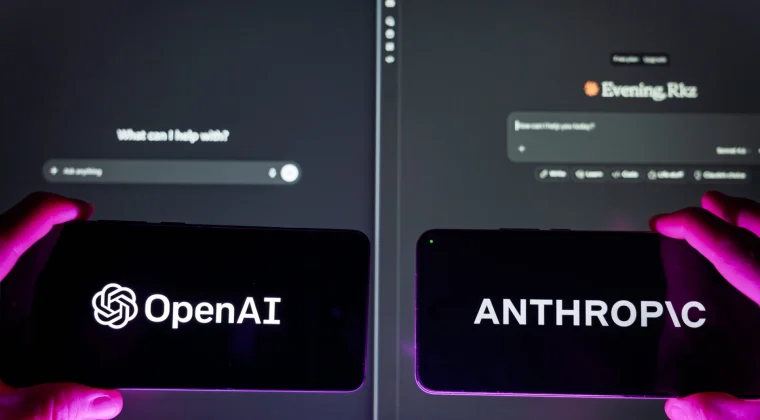
OpenAI vs Anthropic: Comparative Pre-IPO Analysis Report
Published: 30 June 2026,06:58
Published: 30 June 2026,06:58
Market Pulse
Share on:
Share on:
Revenue, Cost Structure, Product Positioning, and Key Risks
Executive Summary
OpenAI and Anthropic are two of the most closely watched private AI companies ahead of the next potential AI IPO wave. Both companies are benefiting from the rapid adoption of generative AI, but their business models are different.
OpenAI is best viewed as a scale-led AI platform. Its strength comes from ChatGPT’s consumer reach, broad product ecosystem, developer adoption, enterprise usage, and strong Microsoft ecosystem support.
Anthropic is best viewed as an enterprise-led AI platform. Its strength comes from API usage, Claude Code, enterprise workflow integration, long-document analysis, and multi-cloud distribution across AWS, Google, and Microsoft.
From a business perspective, OpenAI has the bigger platform story, while Anthropic has the cleaner enterprise workflow story. However, both companies face the same core challenge: turning massive AI usage into sustainable profits after compute costs.
Business Positioning
OpenAI: Scale-Led AI Platform
OpenAI has built one of the strongest AI consumer brands through ChatGPT. Its platform now extends beyond chatbot usage into enterprise tools, API usage, coding, AI agents, data analysis, image, voice, and video.
OpenAI’s business model is built around broad monetisation across consumers, developers, and enterprises.
Key strengths:
Strong consumer reach
Broad product ecosystem
Strong developer and API adoption
Enterprise usage growth
Microsoft ecosystem support
Core challenge:
OpenAI needs to convert massive usage into profitable revenue while controlling high compute and infrastructure costs.
Anthropic: Enterprise-Led AI Platform
Anthropic is more focused on enterprise and professional workflows. Claude is positioned strongly in API usage, coding, long-context document analysis, enterprise search, and workflow automation.
Anthropic’s business model is more concentrated around enterprise usage and API monetisation.
Key strengths:
Strong enterprise positioning
API-led revenue model
Claude Code traction
Long-document and workflow use cases
Multi-cloud distribution
Strong trust and safety positioning
Core challenge:
Anthropic needs to prove that its enterprise revenue is high-quality after cloud reseller payouts, compute commitments, and infrastructure costs.
Revenue and Customer Scale
OpenAI and Anthropic are both scaling rapidly, but their revenue models are different.
Category
OpenAI
Anthropic
Revenue scale
Estimated run-rate around ~$33B
Sacra estimate: ~$47B annualized revenue in May 2026
Customer size
1M+ business customers; 7M+ workplace seats
300K+ business customers; 8 of Fortune 10 use Claude
Revenue model
Subscriptions, enterprise plans, API usage, coding tools, AI agents, multimodal tools
API usage, enterprise contracts, Claude Code, cloud reseller channels, reserved capacity
Growth signal
API reasoning token usage up 320x YoY; weekly enterprise messages up 8x
Revenue up from ~$9B at end-2025; Claude Code reached ~$2.5B annualized revenue
Revenue profile
Broader monetisation across consumers, developers, and enterprises
More enterprise-heavy and API-led revenue model
Key concern
Turning large-scale usage into profitable revenue
Cloud reseller revenue reported on a gross basis
OpenAI’s revenue base appears broader because it has multiple monetisation channels across consumer subscriptions, enterprise plans, developers, API usage, and multimodal tools.
Anthropic’s revenue base appears more concentrated around enterprise and API usage, which may offer clearer business workflow monetisation.
However, Anthropic’s revenue quality needs careful analysis because cloud reseller revenue is reported on a gross basis. This means headline revenue may look larger than net revenue after partner payouts.
Cost Structure
Frontier AI is expensive to scale. Unlike traditional software, every AI query, coding task, document review, or agent workflow requires compute.
The major cost areas include GPUs, cloud infrastructure, data centres, energy, model training, inference cost, and research talent.
Cost Area
OpenAI
Anthropic
Near-term cost pressure
Reported cash burn of ~$3.7B in Q1 2026
SpaceX GPU agreement reported at ~$1.25B per month
Monthly equivalent
Around ~$1.2B per month based on Q1 cash burn
Around ~$1.25B per month from SpaceX GPU capacity
Long-term compute need
Reported compute spend target of ~$600B through 2030
$100B+ AWS commitment over 10 years
Infrastructure buildout
Stargate targets up to $500B in AI infrastructure
Separate $50B U.S. infrastructure buildout
Cloud / partner exposure
Microsoft-linked infrastructure and revenue-share exposure
AWS, Microsoft, NVIDIA, Google/Broadcom, and SpaceX exposure
OpenAI’s cost pressure mainly comes from its massive user scale and infrastructure buildout. Anthropic’s cost pressure comes from large cloud, GPU, and compute capacity commitments.
The key financial test for both companies is the same: revenue growth must outpace compute cost growth. If compute costs rise as fast as revenue, profitability may remain under pressure despite strong adoption.
Product Comparison
OpenAI and Anthropic compete in similar areas, but their product strengths are different.
OpenAI Product Stack
ChatGPT
API
Coding tools
Image, voice, and video
AI agents
Broad all-in-one ecosystem
OpenAI has stronger product breadth. It is better positioned as a horizontal AI platform serving consumers, developers, and enterprises.
Anthropic Product Stack
Claude
API
Claude Code
Long-document analysis
Enterprise search
Workflow automation
Anthropic has stronger enterprise workflow depth. It is better positioned for companies using AI in coding, document-heavy workflows, enterprise search, and internal process automation.
Adoption Signals
OpenAI’s enterprise data shows that AI usage is moving deeper into corporate workflows. The company reports more than 1M business customers, more than 7M workplace seats, ChatGPT Enterprise seats up approximately 9x year-over-year, weekly enterprise messages up approximately 8x, and API reasoning token usage up approximately 320x year-over-year.
Anthropic’s adoption profile appears more enterprise-focused. Sacra estimates that Anthropic has more than 300K business customers, with over 100K running Claude on Amazon Bedrock. The report also states that more than 1,000 customers spend over $1M annually on Claude and that eight of the Fortune 10 are Claude customers.
This suggests OpenAI leads in scale, while Anthropic has strong enterprise penetration.
Valuation Considerations
Both companies are being valued as potential AI infrastructure platforms, not simply software applications.
OpenAI’s valuation case depends on its ability to monetise scale. Its broad product ecosystem gives it a large addressable market, but infrastructure costs and revenue-sharing exposure may pressure margins.
Anthropic’s valuation case depends on enterprise revenue durability. Its API-led model and Claude Code traction are attractive, but revenue comparability is complicated by gross reseller accounting and large compute commitments.
For both companies, premium valuations require proof of:
Durable enterprise demand
Strong customer retention
Pricing power
Lower cost per AI task
Margin expansion
Clear path to free cash flow
Risk Analysis
OpenAI Key Risks
High compute cost
Large infrastructure needs
Strong competition from Anthropic, Google, Meta, and open-source models
IPO timing uncertainty
Pressure to monetise a very large user base
Profitability path remains unclear
Microsoft ecosystem and revenue-share exposure
Anthropic Key Risks
Heavy cloud and compute commitments
Gross vs net revenue quality
Enterprise concentration risk
Compute capacity dependency
High valuation expectations
Strong competition from OpenAI, Google, Meta, and open-source models
Execution risk around scaling enterprise adoption profitably
Scenario Analysis
Bull Case
AI becomes a core enterprise infrastructure layer. Adoption continues to grow, productivity gains become measurable, and both OpenAI and Anthropic improve margins through better pricing and lower cost per AI task.
In this scenario, OpenAI benefits from platform scale, while Anthropic benefits from enterprise workflow depth.
Base Case
AI adoption continues growing, but profitability remains under pressure due to compute costs and competition. Revenue growth stays strong, but public markets become more selective and focus on margin quality.
In this scenario, OpenAI remains the broader platform leader, while Anthropic remains the stronger enterprise monetisation story.
Bear Case
AI capex rises faster than revenue. Enterprise ROI becomes harder to prove, competition pressures pricing, and valuations become difficult to justify.
In this scenario, OpenAI faces scale-to-profitability risk, while Anthropic faces cost-and-revenue-quality risk.
Conclusion
OpenAI and Anthropic are both high-growth AI leaders, but they represent different business models.
OpenAI has the bigger platform story. It is stronger in consumer reach, product breadth, ecosystem potential, and overall AI visibility.
Anthropic has the cleaner enterprise workflow story. It is stronger in API monetisation, Claude Code, enterprise workflows, and business integration.
Category
Stronger Position
Consumer reach
OpenAI
Product breadth
OpenAI
Ecosystem potential
OpenAI
Enterprise workflow
Anthropic
API monetisation
Anthropic
Coding workflows
Anthropic
Cost risk
Both
Valuation risk
Both
Final view: OpenAI may offer broader platform upside, while Anthropic may offer clearer enterprise monetisation. However, both companies still need to prove that AI usage can turn into sustainable profits after compute costs.
Source Note
Figures are based on company disclosures and third-party estimates. They are not audited public-company financials.
Start trading with an edge today
Trade forex, indices, metal, and more at industry-low spreads and lightning-fast execution.
Start trading with deposits as low as $50 on our standard accounts.
Get access to 24/7 support.
Access hundreds of instruments, free educational tools, and some of the best promotions around.
Please be advised that our products and services are currently unavailable to residents and entities located in the Philippines.
This restriction is a result of our firm commitment to adhering to applicable legal and regulatory requirements in all jurisdictions where we operate. In line with our internal compliance protocols and evolving global standards, we continuously assess and update access to our platform to ensure full regulatory alignment.
We appreciate your understanding and cooperation.
If you believe this restriction has been applied in error, please contact our support team for further assistance.
Dear Valued Client,
As part of PU Prime’s ongoing commitment to providing a stable and reliable trading environment, please be informed of the following weekly weekend scheduled optimisation activities:
Important Notice: Please note the Website is intended for individuals residing in jurisdictions where accessing the Website is permitted by law.
Please note that PU Prime and its affiliated entities are neither established nor operating in your home jurisdiction.
By clicking the "Acknowledge" button, you confirm that you are entering this website solely on your own initiative and not as a result of any specific marketing outreach. You wish to obtain information from this website which is provided on a reverse solicitation basis in accordance with the laws of your home jurisdiction.
Please note the Website is intended for individuals residing in jurisdictions where accessing the Website is permitted by law.
Please note that PU Prime and its affiliated entities are neither established nor operating in your home jurisdiction.
By clicking the "Acknowledge" button, you confirm that you are entering this website solely based on your initiative and not as a result of any specific marketing outreach. You wish to obtain information from this website which is provided on reverse solicitation in accordance with the laws of your home jurisdiction.
Ten en cuenta que el sitio web está destinado a personas que residen en jurisdicciones donde el acceso al sitio web está permitido por la ley.
Ten en cuenta que PU Prime y sus entidades afiliadas no están establecidas ni operan en tu jurisdicción de origen.
Al hacer clic en el botón "Aceptar", confirmas que estás ingresando a este sitio web por tu propia iniciativa y no como resultado de ningún esfuerzo de marketing específico. Deseas obtener información de este sitio web que se proporciona mediante solicitud inversa de acuerdo con las leyes de tu jurisdicción de origen.